Jan. 22, 2026
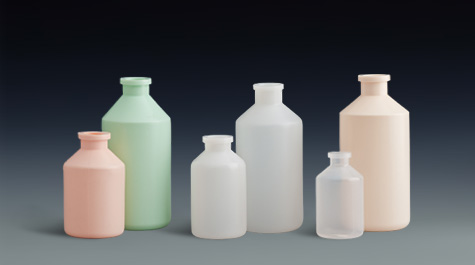
In the veterinary pharmaceutical industry, the plastic vaccine bottle is a cornerstone of disease prevention programs. With the widespread implementation of national mandatory immunization plans, the quality of this primary packaging has come under greater scrutiny than ever. Among the various quality metrics, the seal integrity of the bottle stands out as a paramount standard, directly determining whether a vaccine delivers its promised protection from factory to farm.
Animal vaccines are diverse, including inactivated, live-attenuated, subunit, and toxoid varieties. Each has specific storage requirements, but all share a common dependency: they must be housed within a vaccine bottle that maintains a perfect barrier. The ability of a vaccine to retain its potency and sterility throughout its shelf life is inextricably linked to this seal integrity. A compromised seal can lead to leakage, microbial contamination, or degradation of the delicate biological agent, ultimately resulting in vaccine failure and economic loss. Therefore, ensuring a hermetic seal is not just a packaging concern but a critical component of effective immunization.
An analysis of production and design reveals two primary factors that govern the seal integrity of a vaccine bottle:
1. Dimensional Precision of the Bottle Finish (Neck)
The
geometry of the bottle's neck—specifically its inner and outer
diameters—must be manufactured to exacting tolerances. This precision,
often referred to as the "finish" specification, is crucial for creating
a flawless mechanical interface with the closure system. If the neck
dimensions are inconsistent or out of specification, it becomes
impossible for the rubber stopper and aluminum cap to form a uniform,
tight seal. Even a microscopic gap can become a pathway for leakage or
contamination, undermining the entire packaging system.
2. Quality and Performance of the Closure System
The
second critical factor is the closure itself, typically a combination
of an elastomeric stopper and an aluminum overseal. The quality of these
components is non-negotiable:
The Stopper: Must have consistent density, elasticity, and dimensions to compress evenly against the glass or plastic interior, forming the primary seal. Defects can lead to "breathing" (air exchange) or direct leakage.
The Aluminum Cap: Must provide the correct and consistent crimping force to hold the stopper securely in place under various temperatures and pressures encountered during transport and storage.
Both components must also offer excellent barrier properties to prevent the permeation of moisture and gases, which can degrade the vaccine over time.
Conclusion: The Foundation of Successful Immunization
Effective
animal vaccination is a fundamental pillar of sustainable livestock
farming and food security. This success begins with reliable packaging.
As this analysis shows, the seal integrity of a vaccine bottle hinges on the synergistic precision of the bottle finish and the quality of its closure.
For packaging manufacturers, this necessitates rigorous quality control
at every stage of production—from resin selection and molding to
component assembly. Only through such diligence can the industry produce
the high-quality packaging essential for maintaining vaccine efficacy. In the end, investing in
superior seal integrity is an investment in animal health, farmer
profitability, and the overall resilience of the agricultural sector.

 冀ICP备11016487号-1