Aug. 19, 2026
Quick Answer
The safest way to handle an empty intramammary syringe before filling is to treat transport, warehouse storage, unpacking, and line-side transfer as part of the packaging system. Protect components from compression, heat, dust, mixed lots, damaged cartons, and uncontrolled handling; keep lot identity intact; and perform a defined pre-use check before releasing components to the filling area.
1. Why Pre-Filling Logistics Deserves More Attention
An empty intramammary syringe is usually purchased as a set of packaging components rather than as a finished veterinary medicine. Between the supplier’s final packing operation and the buyer’s filling line, those components may be loaded into export cartons, transported across long distances, received at a warehouse, stored for weeks or months, moved internally, opened, staged, and transferred into a controlled production area. Each step can influence component condition even when the original manufacturing quality is acceptable.
The objective is not to turn ordinary logistics into a complex validation exercise. The practical goal is to keep the barrel, plunger, cap, and applicator area in the same approved condition until filling begins. Buyers should therefore define simple controls for physical protection, cleanliness, identification, storage, and line-side handling.
2. Protect the Syringe From Compression and Distortion
Plastic syringe components are lightweight, which is useful for shipping but means the packaging configuration must prevent excessive compression. A deformed flange, squeezed barrel, distorted cap, or bent applicator feature can create downstream problems during assembly or filling. The risk increases when cartons are over-stacked, components are packed too loosely, or heavy materials are placed on top of syringe cartons.
When approving bulk packaging, review not only the number of components per carton but also how they are supported inside the carton. Internal bags, dividers, trays, or other protective arrangements may be appropriate depending on component geometry and shipment distance. Buyers should also specify how visibly damaged cartons are quarantined when goods arrive.
3. Keep Batch Identity With the Physical Components
Lot traceability becomes harder when outer cartons are opened and components are moved into temporary containers. A practical control is to keep the supplier lot number, component description, received quantity, and internal material code connected to the components through every transfer step.
This is particularly important when barrels, plungers, and caps are supplied separately. Mixing components from different lots without an agreed procedure can make investigation more difficult if a dimensional, assembly, or visual issue is later identified. Warehouse and production teams should be able to answer a simple question at any time: which supplier lot is currently being used on the line?
4. Define Storage Conditions That Protect the Packaging
Storage requirements should reflect the material and the approved packaging configuration. In general, empty plastic syringe components should be protected from unnecessary heat, direct sunlight, dust, moisture exposure, chemicals, strong odors, and mechanical damage. The original protective packaging should remain closed until the components are needed for production whenever possible.
Warehouse control should also consider inventory rotation. A clear first-in/first-out or first-expire/first-out rule, where applicable to a sterilized or shelf-life-controlled supply, reduces the chance that older stock remains unused while later lots are consumed first.
5. Control the Unpacking Route Into the Filling Area
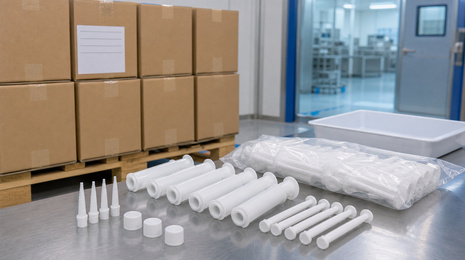
The outside of a shipping carton has been exposed to transport and warehouse environments. That outer packaging should not automatically be treated as suitable for entry into a cleaner filling area. Many manufacturers therefore use staged unpacking: remove transport packaging in the warehouse or material-preparation area, keep the inner protective packaging intact, and only open the final bag or tray at the point defined by the site’s hygiene procedure.
The exact method depends on the buyer’s facility and process. What matters is that the route is deliberate. Operators should know where outer cartons stop, where inner packaging is opened, which surfaces are allowed into the production area, and how unused components are protected after a production run.
6. Perform a Pre-Filling Release Check
Incoming quality control confirms that received components meet defined requirements, but a pre-filling release check serves a different purpose: it confirms that the material selected for today’s production is still suitable after storage and handling. The check can be concise and focused on the risks created between goods receipt and line use.
Useful pre-filling checks may include verifying the correct component reference and lot, confirming that protective packaging is intact, checking for visible deformation or contamination, confirming required quantities, and ensuring the barrel-plunger-cap configuration matches the production order. If the filling process depends on a specific assembly direction or component supply format, that should also be verified before the line is started.
7. Treat Line-Side Staging as Part of the Packaging Plan
Once components are placed beside the filling line, they can be exposed to new risks: open containers, operator handling, mixed lots, excessive staging time, or returned partial packs. A line-side material rule should define how much material may be opened, how it is identified, how unused components are covered, and whether opened quantities can be returned to the warehouse.
For automated or semi-automated filling, component orientation also matters. If barrels, plungers, or caps must be presented in a consistent direction, the bulk-pack format should support efficient feeding rather than forcing operators to repeatedly re-sort components. This is one reason to discuss the buyer’s filling process with the packaging supplier before commercial orders are finalized.
8. Use the Final Supply Format During Production Trials
A filling trial is most useful when the empty intramammary syringe is supplied in a configuration that is close to commercial reality. Samples handed individually to an engineer may perform well, while production components packed in bulk can behave differently because of handling, orientation, static, deformation, or transfer methods.
Before scale-up, test not only the syringe itself but also the way components arrive, are unpacked, are staged, and are fed to the process. This creates a more realistic view of production readiness and can reveal small logistics changes that improve efficiency without changing the syringe design.
9. FUDAPLASTIC Empty Intramammary Syringe Options
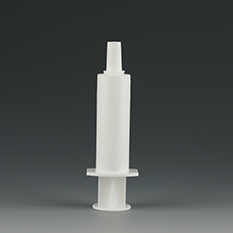
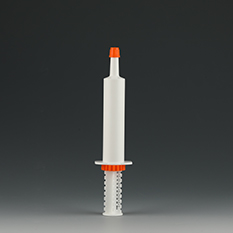
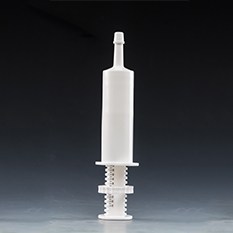
FUDAPLASTIC supplies empty intramammary syringe components for veterinary pharmaceutical filling projects. The current product range includes PE syringe references in 5 ml, 8 ml, 10 ml, and 13 ml capacities. Project discussions can cover barrel, plunger, cap, applicator-tip or nozzle configuration, color, printing, individual packing, bulk packing, and export carton requirements.
Related product pages: Empty Intramammary Syringe Overview | 5 ml Intramammary Syringe | 13 ml Intramammary Syringe
The 5 ml reference currently listed on the website is G010, while the 13 ml reference is G002. Buyers should confirm the final component configuration, dimensions, packaging format, and filling compatibility against their own process before commercial production.
Frequently Asked Questions:
Should empty intramammary syringes stay in the original packaging until filling?
Whenever practical, keeping components in their approved protective packaging until the defined unpacking stage helps reduce unnecessary handling and environmental exposure.
Can different supplier lots be mixed on the same filling run?
That depends on the buyer’s material-control procedure. If lots are combined, traceability and investigation capability should remain clear. Many companies prefer to control lot transitions deliberately.
What should be checked after long-distance shipping?
Check transport cartons, protective packaging, component identification, visible deformation, contamination, quantity, and any condition that could affect filling or assembly.
Does bulk packing matter for automated filling?
Yes. Component orientation, packing density, static behavior, ease of feeding, and protection from distortion can all influence line handling. The supply format should be reviewed during production trials.
Does FUDAPLASTIC supply finished veterinary medicine?
No. FUDAPLASTIC supplies empty packaging components for veterinary pharmaceutical filling projects; it does not supply the finished medicinal product.
Discuss Your Empty Intramammary Syringe Project
Need to confirm syringe size, component supply format, bulk packing, or sample requirements for your filling process?
Contact FUDAPLASTIC to discuss your veterinary pharmaceutical packaging project. Contact Us
Previous: None
Next: How to Build an Incoming Quality Control Plan for Empty Intramammary Syringes

 冀ICP备11016487号-1