Aug. 12, 2026
Quick Answer
An incoming quality control plan for an empty intramammary syringe should verify the lot identity, approved component configuration, critical dimensions, plunger and cap function, visual condition, packaging integrity, quantity, documentation, and any project-specific acceptance criteria before the components are released to filling. The goal is not to retest the supplier’s entire production process, but to confirm that the received lot matches what your project approved.
1. Why Incoming Quality Control Deserves Its Own Plan
Most packaging projects spend considerable time on sample selection, filling trials, and supplier qualification. Once the commercial order arrives, however, the receiving inspection is sometimes treated as a routine warehouse step. For an empty intramammary syringe, that can create a gap between project approval and actual production use.
An incoming lot is the point where the buyer can confirm that the delivered barrel, plunger, cap, applicator-tip configuration, color, printing, and packing format are consistent with the approved sample or specification. This is especially important when the same supplier manufactures multiple syringe capacities or customized component combinations.
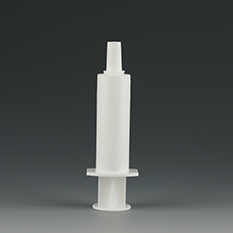
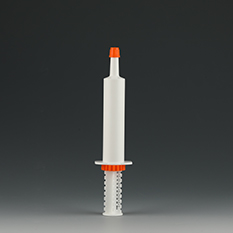
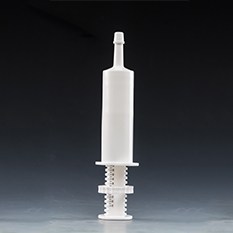
Xinfuda currently lists PE intramammary syringe references in 5 ml, 8 ml, 10 ml, and 13 ml capacities, supplied as empty packaging components rather than finished veterinary medicine. Because different references and configurations may coexist within a purchasing program, lot identification should be a formal part of receiving inspection rather than an informal visual check.
2. Start with an Approved Reference, Not Memory
A practical incoming inspection begins with a controlled reference package. The quality team should be able to compare the delivered lot with an approved drawing, specification, signed sample, approved artwork, or purchase specification. Without a fixed reference, inspectors may notice obvious defects but miss configuration changes that still look acceptable at first glance.
At minimum, the reference should define the syringe capacity or model, component set, material, tip and cap configuration, color, print requirement, supply format, and any dimensions or functional characteristics that are critical to filling. If the project uses a 5 ml or 13 ml reference, the product pages can also be used as a preliminary cross-check for model identity before internal specifications take precedence.
3. Five Checks to Perform Before Releasing a Lot
3.1 Identity and Configuration Check
Confirm the product reference, nominal capacity, component count, color, printing version, cap or tip style, and packing format. This prevents a correct-looking but wrong configuration from entering the filling area.
3.2 Visual Condition Check
Inspect representative units for contamination, flash, deformation, incomplete molding, damaged nozzles, cracked caps, abnormal discoloration, printing defects, or foreign material. Visual criteria should be written clearly enough that different inspectors reach similar decisions.
3.3 Dimensional Verification
Measure only the dimensions that are important to your process and product. Typical project-specific checks may include barrel diameter, overall length, nozzle dimensions, or other interfaces that affect filling equipment, fixtures, caps, or secondary packaging. The purpose is to confirm conformity to the agreed drawing, not to measure every available dimension on every lot.
3.4 Functional Check
Evaluate a defined sample for plunger insertion and travel, cap fit or retention, component assembly, and basic leakage or handling behavior where relevant. If the syringe will be filled with a viscous formulation, incoming inspection should not replace formulation-specific performance testing; it should confirm that the packaging components received are consistent with the already approved configuration.
3.5 Packaging, Count and Documentation Check
Verify inner-bag or bulk-pack condition, carton identification, quantity, lot or batch information, and the documents required by your purchasing specification. Damaged bulk packaging, unclear lot identification, or mixed components can create production risk even when the individual syringe itself is dimensionally acceptable.
4. Use Sampling Rules That Match the Risk
Incoming inspection does not mean checking every syringe individually. The sampling level should reflect the importance of the characteristic, the supplier’s history, the lot size, and the buyer’s own quality system. A mature program may use tighter inspection for new suppliers, changed tooling, first commercial lots, or recently corrected defects, and reduced inspection only after consistent performance has been demonstrated.
Keep the sampling plan separate from the technical acceptance criteria. One document should define how many units are checked; another should define what passes or fails. This separation makes it easier to adjust inspection intensity without changing the approved product specification.

5. Record What Matters for Traceability
A good receiving record should connect the supplier lot to the buyer’s internal receipt, inspection result, and eventual filling batch. Useful records include the supplier lot number, receipt date, purchase order, quantity received, sampled quantity, inspection results, deviations, photographs of unusual findings, disposition decision, and the identity of the person who performed or reviewed the inspection.
For customized projects, retain a controlled reference sample or approved image set when practical. This gives purchasing, quality, and production teams a common comparison point if a future delivery appears different from the original approval.
6. When a Difference Should Trigger a Supplier Review
Not every variation requires rejection, but unexplained variation should not be ignored. A different cap shade, altered print position, changed component packing method, noticeable plunger behavior, or dimensional shift may be harmless—or it may indicate a process, tooling, material, or configuration change. The buyer should have a defined path for placing the lot on hold while the supplier confirms the reason and impact.
This is where incoming quality control supports change control. It provides a practical checkpoint between supplier production and the buyer’s filling line, helping detect changes before they become filling deviations or finished-product investigations.
7. Product References for Project Comparison
For buyers evaluating the Xinfuda range, the intramammary syringe overview page lists four PE reference capacities: 5 ml, 8 ml, 10 ml, and 13 ml. The 5 ml page identifies reference G010, while the 13 ml page identifies reference G002 and provides dimensional data for each model. These public references are useful for preliminary model comparison; the final incoming inspection should always follow the buyer-approved project specification.
Review the full range: Empty Intramammary Syringe Overview
Compact reference: 5 ml Intramammary Syringe (G010)
Higher-capacity reference: 13 ml Intramammary Syringe (G002)
8. FAQ
Should every incoming lot of empty intramammary syringes be inspected?
A receiving or quality check should be defined by the buyer’s quality system. The depth of inspection can vary by supplier history, risk, lot size, and whether the configuration has changed.
What is the most important incoming check?
Identity and configuration control comes first. The received barrel, plunger, cap/tip, capacity, printing, and packing format should match the approved project reference.
Can incoming inspection replace sample qualification?
No. Sample qualification evaluates whether a configuration is suitable for the project. Incoming inspection confirms that later deliveries remain consistent with the approved configuration.
Should viscosity testing be repeated on every incoming lot?
Usually, formulation-specific testing belongs to product development or validation rather than routine incoming inspection. Routine receiving checks should focus on packaging consistency unless the buyer has defined a special test requirement.
What should happen if the received lot looks different from the approved sample?
Place the lot on hold and investigate the difference before filling. The supplier should confirm whether the difference is cosmetic, dimensional, material-related, or the result of a manufacturing or packaging change.
10. Conclusion
An empty intramammary syringe project is not complete when the sample is approved or the purchase order is placed. A controlled incoming quality plan closes the loop by confirming that every commercial delivery matches the configuration that was actually evaluated. By combining identity checks, targeted dimensional and functional inspection, packaging review, traceable records, and clear hold/release rules, veterinary pharmaceutical companies can reduce avoidable filling-line surprises and create a more reliable path from component receipt to production.
Discuss Your Empty Intramammary Syringe Project
Need samples, dimensional information, or help comparing syringe capacities for a veterinary filling project? Contact FUDAPLASTIC with your target fill volume, formulation type, filling method, preferred tip/cap configuration, and estimated quantity.

 冀ICP备11016487号-1