Jul. 23, 2026
Quick answer
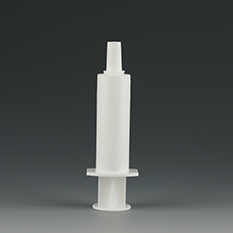
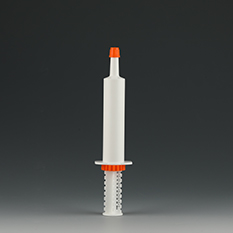
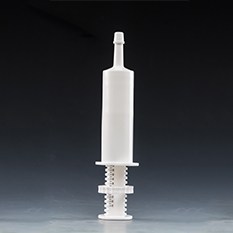
Before requesting samples, prepare the intended use, fill-volume range, formulation characteristics, tip and closure concept, filling process, material documentation, packaging condition, projected demand, and a measurable evaluation plan. This allows a supplier to provide a representative empty intramammary syringe rather than a generic reference sample.
Requesting samples is often treated as the first practical step in an empty intramammary syringe project. In reality, the quality of the samples you receive depends heavily on the information you prepare before contacting a supplier. A vague request may produce a generic syringe that does not represent final filling, dosing, or packaging requirements. A structured project brief allows the manufacturer to select a more relevant barrel, plunger, tip, cap, material, and packaging configuration from the start. It also shortens later discussions about compatibility, sterilization, and production.
1. Define the Product Use Before Discussing the Syringe
Begin with the intended veterinary use, not only the syringe dimensions. Clarify whether the syringe will be used for a lactating-cow treatment, dry-cow formulation, teat sealant, nutritional paste, or another udder-care application. The formulation category influences viscosity, required delivery force, tip design, and the level of protection needed during storage and transport. Also state who will fill it and whether it must be supplied clean, non-sterile, or sterilized. These points determine which existing platform is worth sampling.
2. Prepare a Target Fill-Volume Range
Do not provide only one nominal volume. State the target fill volume, acceptable headspace, expected fill-weight tolerance, and any future volume variants. A project may start at 5 mL but later require 8 mL or 10 mL versions. Sharing this roadmap helps the supplier judge whether one barrel platform can support multiple SKUs. It also affects plunger travel, graduation requirements, flange geometry, and filling-line settings. Samples should confirm both dose capacity and consistent discharge at the intended volume.
3. Describe the Formulation’s Physical Characteristics
A useful sample request should include basic formulation characteristics, even when the final recipe is confidential. Key inputs include viscosity, density, suspended particles, oil or water base, environmental sensitivity, and known material risks. If exact values are unavailable, describe it as a low-viscosity liquid, high-viscosity paste, or particle-containing suspension. This information helps the manufacturer recommend suitable materials and tolerances. It also indicates whether later compatibility, migration, extractables, or container-closure integrity studies may be necessary.
4. Specify the Tip and Closure Concept
The tip is one of the most project-specific parts of an intramammary syringe. Define whether you prefer a short insertion tip, a longer cannula-style tip, a smooth tapered profile, or a protected tip with a removable cap. Include expectations for tip diameter, insertion depth, cap retention, leak resistance, and opening force. If your market requires partial insertion practice, the design should support controlled application without encouraging excessive insertion. Ask the supplier to explain which tip options are standard and which would require custom tooling. Visually similar samples may behave differently during filling, transport, and field use.
5. Map the Filling and Assembly Process
Before samples are selected, document how the device will move through your production process. Identify whether filling will be manual, semi-automatic, or fully automatic; whether the syringe will be filled from the front or back; how the plunger will be inserted; how the cap will be applied; and what in-line inspections are planned. Share machine drawings, nest dimensions, conveyor restrictions, or target cycle rates when available. Even at an early stage, these details can prevent a sample from being approved by the product team but rejected by engineering. For an OEM project, the empty intramammary syringe must be compatible with the formulation and the filling system.
6. Establish Material and Regulatory Expectations
Prepare a list of required material declarations and quality documents before requesting samples. Typical items include resin identification, specifications, certificates of analysis, compliance statements, and additive documentation. Requirements vary by market, so the syringe supplier should not define your complete regulatory strategy. However, the manufacturer should be able to explain its material traceability, quality controls, change-management approach, and available test records. Early alignment prevents a technically suitable sample from becoming unusable because the supporting documentation does not meet the project’s needs.
7. Define Packaging, Sterilization, and Shipping Conditions
Samples should represent the intended supply condition as closely as practical. State whether components may be delivered in bulk bags, trays, nests, or preassembled sets. Clarify cleanroom expectations, particle-control requirements, and whether the final device will be sterilized by ethylene oxide, gamma irradiation, electron beam, or another method. Packaging affects deformation, contamination risk, cap retention, and line feeding. Long-distance transport, temperature changes, and stacked cartons can reveal weaknesses missed in bench testing. Ask for packaging photos, pack quantities, and recommended storage conditions together with the physical samples.
8. Create a Practical Sample Evaluation Plan
Decide in advance how samples will be evaluated. A simple checklist should cover appearance, dimensions, barrel clarity, plunger fit, startup force, glide force, leakage, cap retention, tip performance, fillability, discharge completeness, labeling area, and packaging integrity. Assign owners from formulation, engineering, quality, regulatory, and purchasing. Use a representative placebo or formulation simulant during testing rather than relying only on air or water. Record test conditions and compare samples against measurable acceptance criteria. This turns the sampling stage into a controlled feasibility exercise instead of a subjective design review.
9. Send a Complete Sample Request Package
A strong request package normally includes a one-page project summary, target volume, formulation description, tip and closure preference, material expectations, filling process, annual demand estimate, target launch timing, required documents, sample quantity, and delivery address. It should also identify which requirements are fixed and which are open to supplier recommendations. An annual forecast helps the manufacturer distinguish a laboratory trial from a scalable commercial program. For custom projects, include expected development milestones and decision dates so both sides can plan technical reviews efficiently.
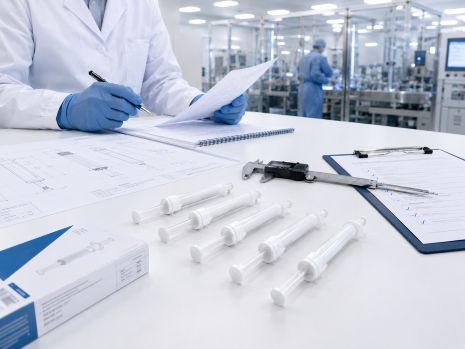
What Should Be Confirmed Before You Approve Samples?
Before approval, confirm that the samples match the documented revision, materials, dimensions, and assembly state. Verify whether they come from production tooling, prototype tooling, or a similar reference mold. Prototype samples may support handling studies but may not represent final tolerances or appearance. Request a written summary of any differences between the sample and the proposed commercial product. This distinction matters when comparing suppliers and planning validation.
Conclusion
Preparing an empty intramammary syringe project before requesting samples reduces avoidable iterations and makes supplier feedback more valuable. The goal is to provide enough structured information for the manufacturer to recommend a relevant platform, explain risks, and identify customization needs. A well-prepared brief leads to better samples, faster testing, clearer quotations, and a more reliable path from feasibility to commercial supply.
Frequently Asked Questions
How many samples should be requested for an initial evaluation?
The quantity should cover dimensional inspection, formulation trials, filling-line checks, packaging tests, and retained samples. For an early feasibility review, teams commonly request enough units for several independent test groups rather than one small visual sample set.
Can a standard syringe sample represent a custom project?
It can demonstrate general handling, material feel, and platform feasibility, but it may not represent final tip geometry, tolerances, color, labeling area, or packaging. Any differences should be documented before internal approval.
Should the final formulation be shared with the supplier?
Not necessarily. A confidential formulation may be replaced by a technical profile describing viscosity, density, solvent system, particles, and known material risks. More detailed information can be shared later under an appropriate confidentiality agreement.
When should custom tooling be discussed?
Custom tooling should be discussed when an existing platform cannot meet critical requirements such as volume, tip design, closure performance, filling-line interface, branding, or regulatory documentation.
Planning an Empty Intramammary Syringe Project?
Share your target volume, formulation profile, tip concept, and sample plan with our team.
Contact Xinfuda for Project Evaluation

 冀ICP备11016487号-1