Apr. 15, 2026
For pharmaceutical companies focusing on insulin and peptide therapies, reusable insulin pens are a critical delivery device that balances efficacy, cost-efficiency, and patient compliance. This information covers key considerations for developing, producing, and deploying reusable insulin pens, tailored to meet the needs of manufacturers and healthcare providers.
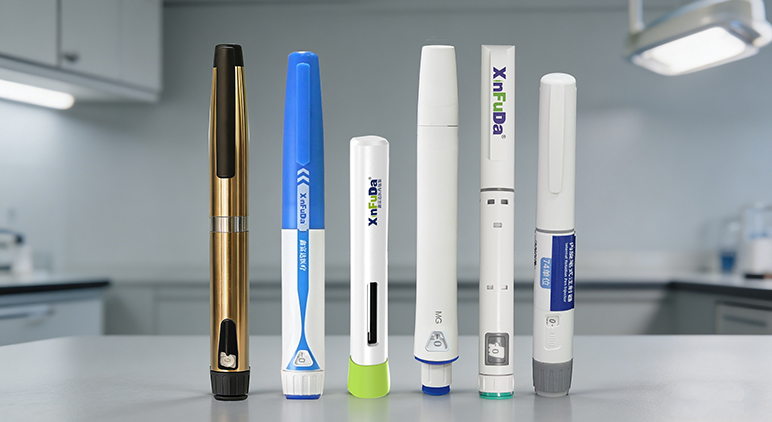
Reusable Insulin Pens for Peptide Therapy
Reusable insulin pens must prioritize precision and reliability for long-term use. For reusable insulin pens for peptide therapy, the dose adjustment mechanism must be flexible to accommodate varying peptide dosage requirements, while ensuring tight sealing to prevent drug leakage. Ergonomic design—including non-slip grips and clear dose displays—is essential to improve patient adherence and reduce operational errors, ensuring consistent performance in clinical applications.
Medical grade reusable insulin pens must be constructed from materials that do not interact with insulin or peptide formulations. This prevents adsorption or degradation of drugs, ensuring the integrity of therapeutic agents. Rigorous compatibility tests are required to confirm that the pen does not alter the molecular structure of insulin or peptides, supporting consistent treatment outcomes.
Insulin & peptide auto-injector manufacturers must adhere to global regulations, including ISO 11608 standards and FDA guidelines. This involves biocompatibility testing, dose accuracy validation, and post-market surveillance to ensure product safety and compliance, which is critical for market access and building trust with pharmaceutical partners.
Efficient production of reusable insulin pens requires cleanroom environments and strict quality control to ensure batch consistency. A reliable supply chain, combined with robust traceability systems, supports scaling production to meet global demand, while maintaining competitive pricing for pharmaceutical partners.
Previous: None

 冀ICP备11016487号-1