Jan. 13, 2026
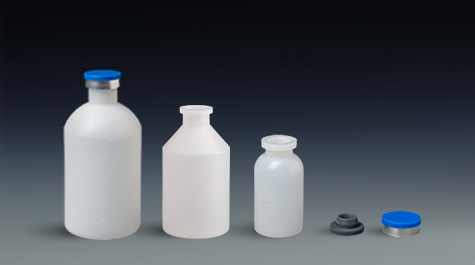
Vaccination is a cornerstone of modern animal husbandry, essential for controlling infectious diseases and ensuring the health and productivity of livestock. At the heart of this process lies a critical but often overlooked component: the veterinary vaccine bottle. The dimensional accuracy of these containers is paramount. It directly influences the precision of drug filling, the integrity of the seal with the closure system, and ultimately, the assurance of correct vaccine dosage. So, how do professionals ensure these bottles meet exact specifications? Here is a step-by-step guide to measuring the key external dimensions of a veterinary vaccine bottle.
Accurate quality control requires measuring several key aspects of the bottle's geometry. The following methods, typically performed with precision tools like calipers and micrometers, are industry standards.
1. Overall Height
What it is: The vertical distance from the top of the bottle finish (the sealing surface) to the very bottom of the base.
How to Measure: Place the bottle upright on a flat, level surface. Using a depth gauge or caliper, position the measuring tool from the highest point of the bottle's finish. Rotate the bottle 360 degrees and record both the maximum and minimum readings. These values should be compared against the design specifications to ensure consistency and proper fit within packaging systems.
2. Finish (Neck) Diameter
What it is: The outer diameter of the bottle's neck, which interfaces with the rubber stopper and aluminum crimp cap.
How to Measure: Carefully position the measuring jaws of a caliper across the center of the bottle's finish. Avoid measuring on the parting line (the seam from molding). Tighten the caliper gently and rotate the bottle a full rotation. Record the maximum and minimum values. This dimension is crucial for seal integrity; even minor deviations can cause leakage or compromised sterility. Tolerances are typically very tight, often within ±0.10mm.
3. Body Diameter
What it is: The maximum external diameter of the bottle's main body.
How to Measure: Use a caliper to contact the point of the bottle's widest girth. Gently tighten the tool and rotate the bottle 360 degrees, noting the highest and lowest readings. Consistency in body diameter is vital for labeling, automated handling on filling lines, and stable storage. Common tolerance ranges are within ±0.10mm.
4. Wall Thickness
What it is: The uniformity of the glass or plastic material thickness at critical points: the finish, shoulder, sidewall, and base.
How to Measure: This is a destructive test. A sample bottle is carefully cut at symmetric points to allow a specialized wall thickness gauge (often ultrasonic or a ball micrometer) to access internal measurement points. Measurements are taken at multiple symmetric locations for each section. Significant variation in wall thickness can lead to weak points susceptible to breakage or compromise barrier properties. Results must fall within the strict tolerances outlined in the product design drawings.
Precise control over these vaccine bottle dimensions is far from an academic exercise. It is a fundamental requirement for:
Accurate Fill Volume: An out-of-spec inner volume can lead to under- or over-filling, affecting dose accuracy.
Seal Integrity: An imprecise finish diameter will not form a reliable seal with the closure, risking contamination and product loss.
Production Efficiency: Bottles that do not meet dimensional standards can jam high-speed automated filling and capping lines, causing downtime and waste.
Strength and Stability: Uniform wall thickness ensures the bottle can withstand the pressures of transport, handling, and thermal stresses.
Rigorous dimensional measurement is a primary defense in ensuring the quality, safety, and efficacy of veterinary vaccines. By adhering to these precise measurement protocols for overall height, finish diameter, body diameter, and wall thickness, manufacturers guarantee that every veterinary vaccine bottle performs its vital role flawlessly. This commitment to precision in packaging directly supports the larger goal of reliable disease prevention, protecting animal health and the agricultural economy. For any stakeholder in the animal health supply chain, understanding this aspect of quality control is essential.

 冀ICP备11016487号-1